
Gesture and Form charts the evolving language of mark-making-from the avant-garde edge of the 1920s to the conceptual and post-medium experiments of today. Across these works, drawing emerges as the artist's most versatile laboratory: a space to test ideas, rewrite conventions, and fuse thought directly with touch.
The presentation opens in 1927 with two radical departures from tradition. Julio González's sinuous ink and watercolor landscape translate sculptural thinking onto paper, "drawing in space" with lines that hover between volume and void. In dialogue, Francis Picabia's Untitled (1927-28) overlays classical nudes with mechanical schemata, collapsing antiquity and modernity into a single mischievous image. Together, they announce drawing as an arena for invention rather than rehearsal.
We then move to the summer of 1941, when Europe was engulfed in World War II. Pablo Picasso's L'aubade: Études de nus allongés (Dora Maar) projects the war's psychic violence onto the body of his companion, compressing anguish into taut, urgent strokes. By contrast, Henri Matisse's contemporaneous botanical studies distill vines and leaves to their most essential curves, seeking solace and spiritual repair in nature's rhythms. The pair stage a striking dialogue on how two giants answered the same historical trauma with diametrically opposed visions-one turning inward toward human suffering, the other outward toward healing abstraction.
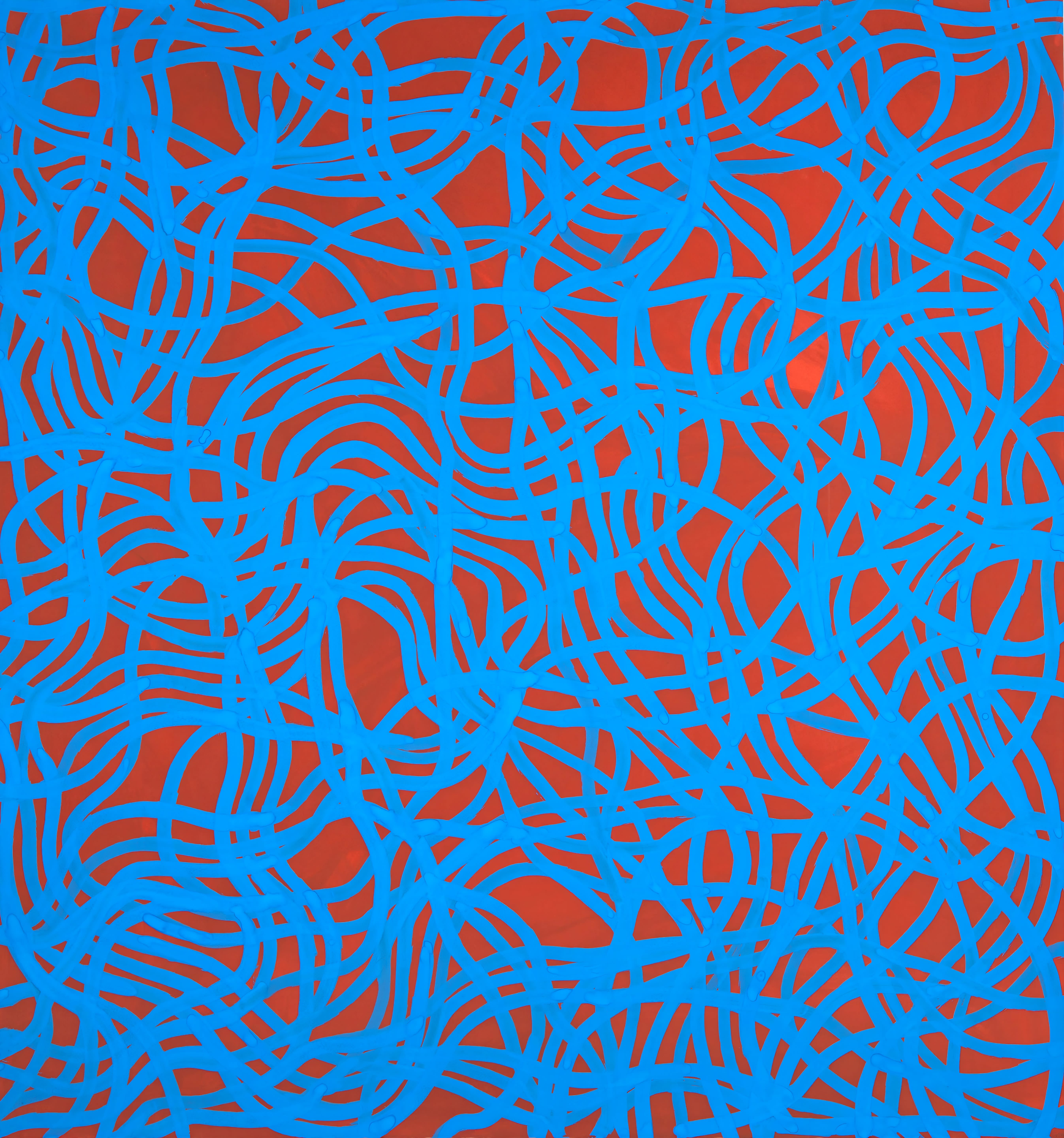
Post-war innovations push drawing beyond its customary borders. Sol LeWitt's Squiggly Brushstrokes (1997) and Irregular Grid (2001) convert gesture into system, finding lyricism in calculated repetition. Sam Gilliam's Untitled (It's Yellow) (1973) merges drawing, painting, and printmaking on a single radiant surface, letting pigment, fabric, and paper bleed into one another and dissolving medium-specific boundaries.
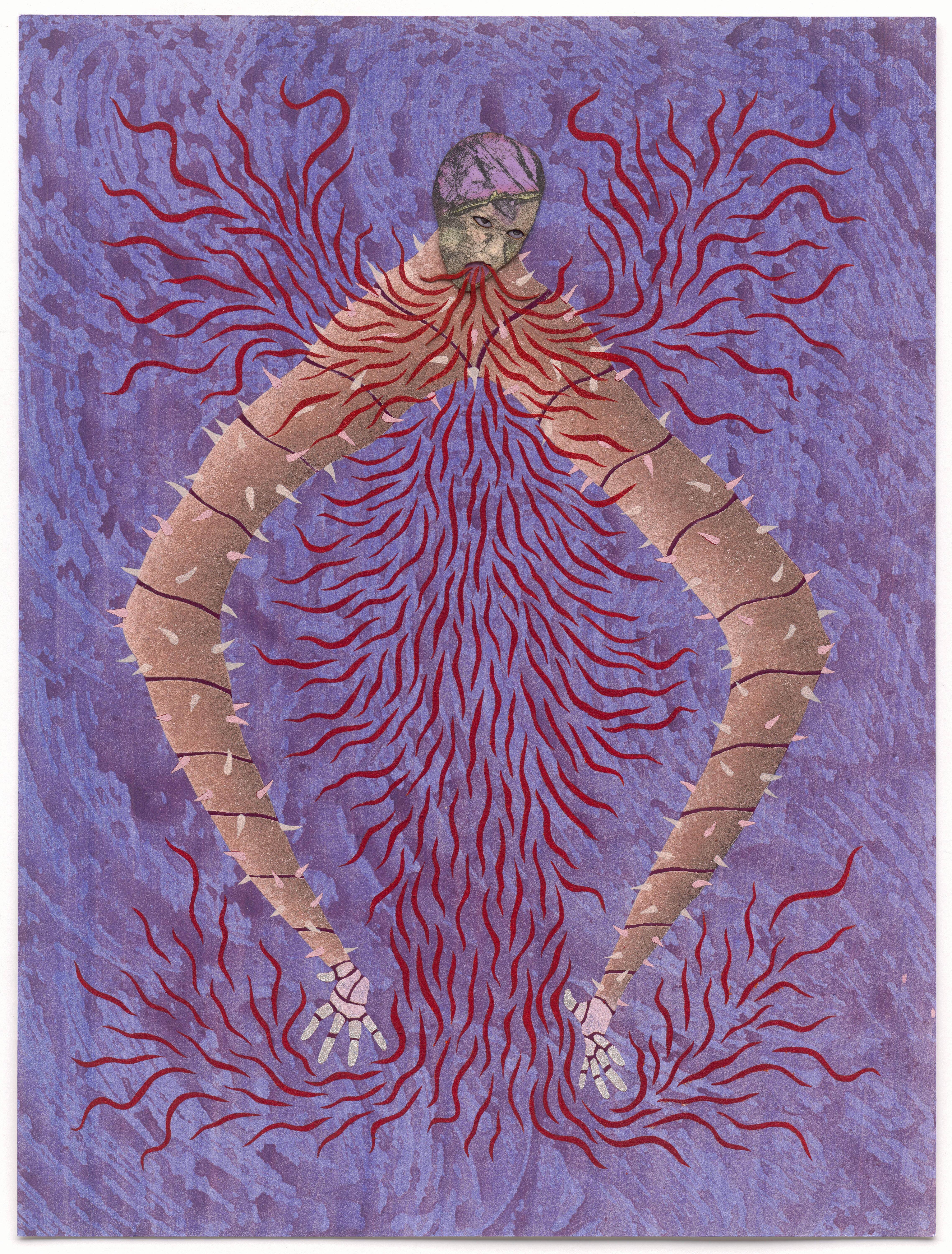
Contemporary voices reclaim drawing as a conduit for identity and cultural memory. Felipe Baeza's Beyond the Vessel (2024) layers monoprint, pochoir, and collage into figures perpetually in flux-embodying migration, resilience, and self-construction. La Chola Poblete wields portraiture as an act of historical redress, threading colonial critique and queer subjectivity through razor-sharp, poetic lines. Meanwhile, Nelo Vinuesa fractures and rebuilds pictorial space, reminding us that every mark negotiates between memory and invention.
Spanning nearly a century, Gesture and Form reveals a fluid continuum between tradition and radical innovation. Far from merely preparatory, drawing here becomes an active field where gesture meets concept, and where the simplest line can open onto the widest expanse of human experience.
Stories
Essay · Allison Hayes · May 20, 2025
Patterns in Motion
The Cross-Cultural Resonance of Sol LeWitt and Emily Kame Kngwarreye
Essay · Allison Hayes and Thomas Clifton · August 7, 2025
Watercolor as Queer Method
La Chola Poblete and the Politics of the Stain
Essay · Thomas Clifton · April 14, 2025
Felipe Baeza
Transmutations in Paper and the Alchemy of Vision