
Francis Picabia
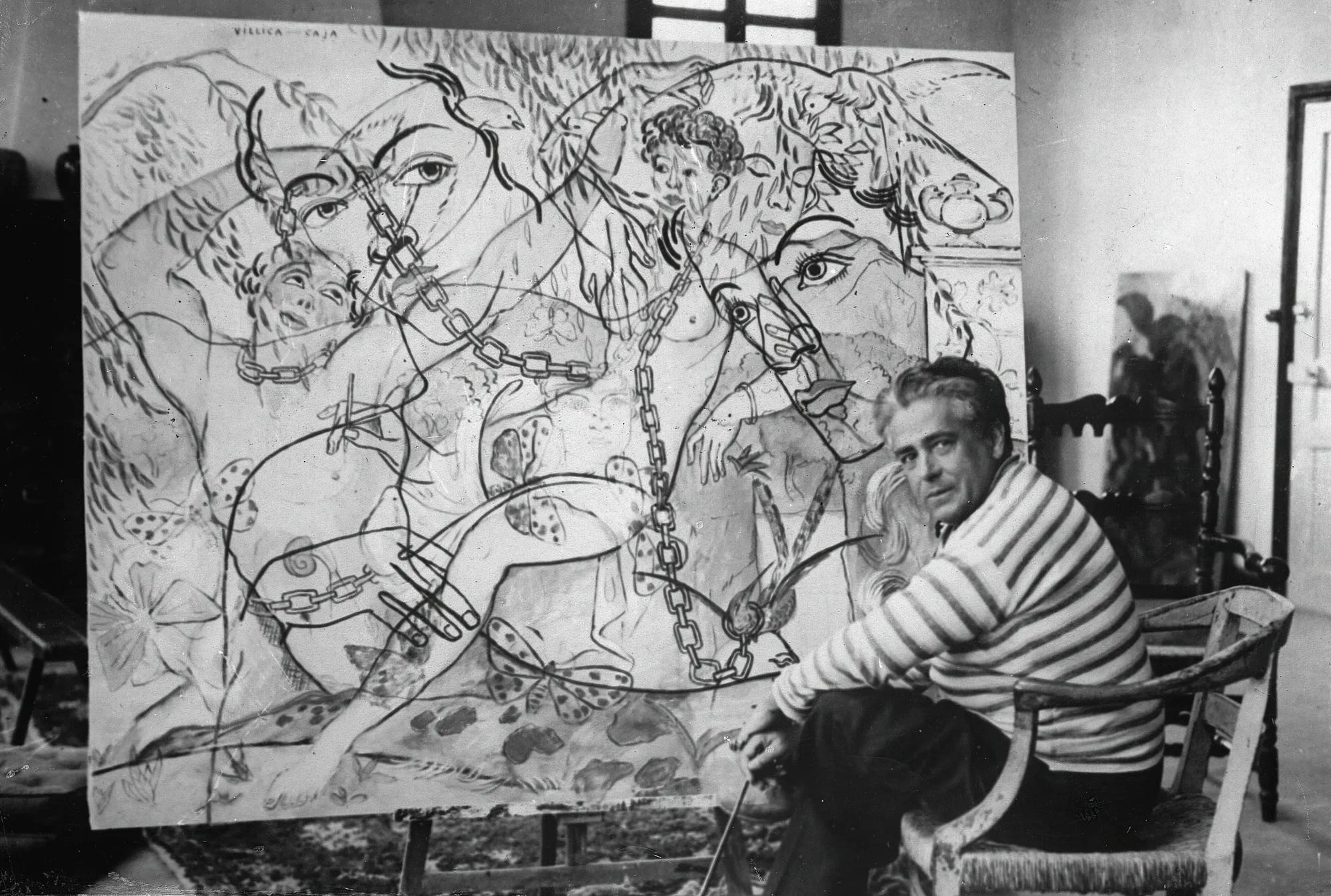
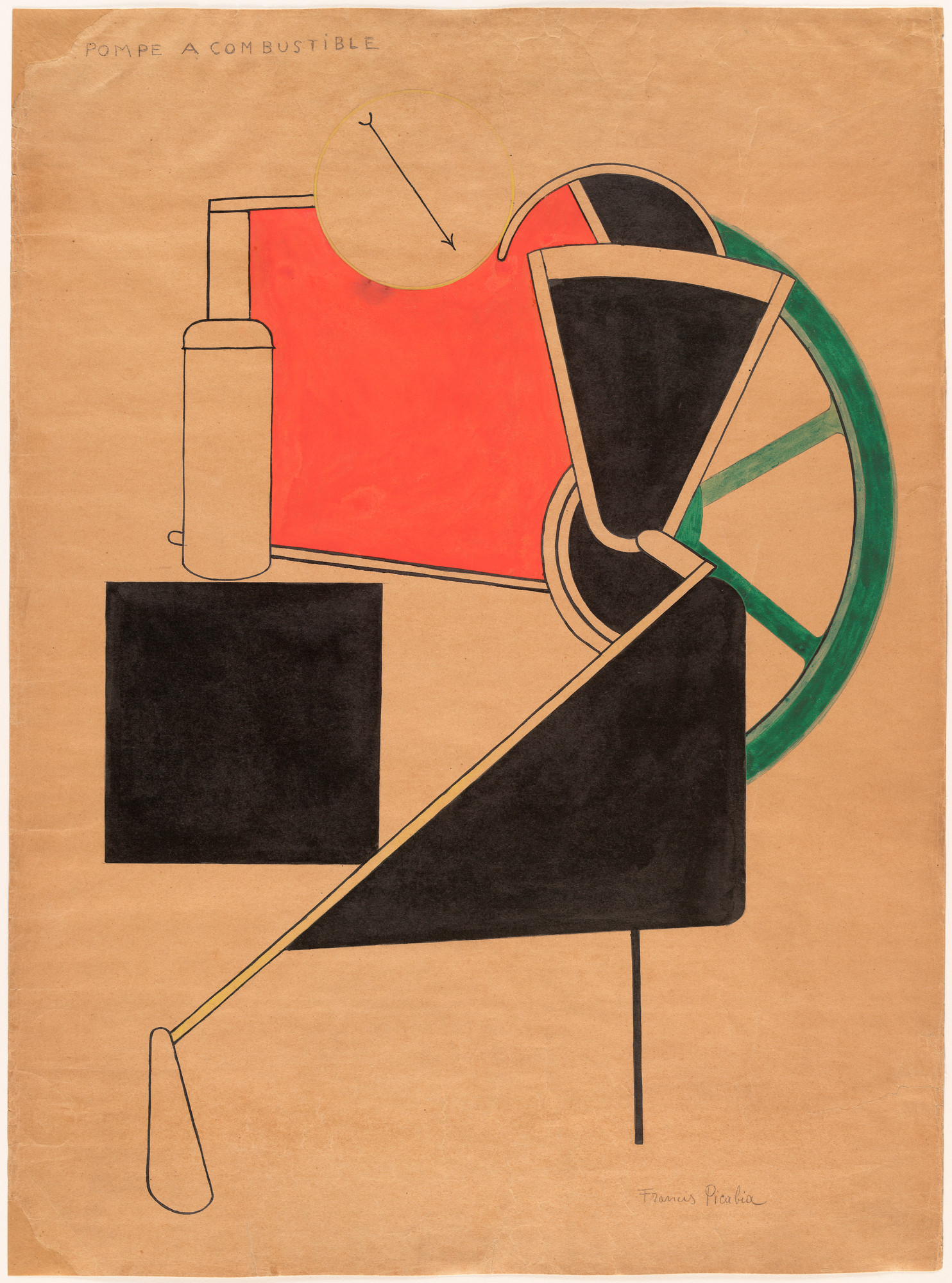
Francis Picabia (Paris, France, 1879 – Paris, France, 1953) moved through more styles and convictions than perhaps any other artist of his generation, treating reinvention itself, and even outright contradiction, as his one consistent principle.
Trained at the École des Arts Décoratifs in Paris, Picabia began as a competent Impressionist before working rapidly through Cubism and toward abstraction in the years before the First World War. His 1913 trip to New York for the Armory Show brought him into the orbit of the photographer and dealer Alfred Stieglitz, whose gallery, 291, gave an early audience to Picabia's mechanomorphic drawings, among them Very Rare Picture on the Earth (1915), satirical portraits and relationships rendered as diagrams of pistons, spark plugs, and machine parts that reduced human intimacy and failure to the malfunction of an engine. Picabia became a central, itinerant figure of Dada, shuttling between New York, Zurich, and Barcelona and founding and editing the journal 391, a needling echo of Stieglitz's own magazine. His close, often fractious friendship with Marcel Duchamp shaped both artists throughout these years.
Projects
Gesture and Form
Selected Drawings from the 20th and 21st Century
12 June - 26 September 2025
Gesture and Form explores the act of mark-making as a means of expression, innovation, and experimentation across the 20th and 21st century.
View ProjectStories
Essay · Joan Robledo-Palop · June 22, 2026
Dominique and John de Menil and the Ethics of Attention
The Architecture of Collecting
This essay continues The Architecture of Collecting, a series on the spaces, patrons, relationships, and intermediaries through which twentieth-century art entered cultural memory. Dominique and John de Menil built one of the great anti-trophy collections of modern history, shaping not merely an accumulation of objects but a set of conditions, including architecture, scholarship, faith, friendship, and institutional care, through which art could be encountered with seriousness, freedom, and moral consequence.
Read More