

This intimate exhibition, presented in a dedicated viewing room, showcases a curated selection of key sculptures and drawings by Julio González from the 1930s, a pivotal decade in his artistic evolution. During this period, González refined his mastery of iron sculpture, pioneering a revolutionary approach to form, space, and material that would profoundly influence modernist sculpture. The works on view highlight his technical innovations as well as his ability to translate the expressive qualities of drawing into three-dimensional compositions. Through this focused selection, the presentation offers insight into González’s role as a trailblazer of welded metal sculpture and his lasting impact on the trajectory of modern art.
Central to the exhibition are three seminal bronze sculptures, Main debout (1936–1937), Main couchée (1937), and Main aux piquants (1937), which epitomize González’s exploration of abstraction and the expressive potential of the human hand. Each work presents a striking balance between figuration and geometric construction, underscoring the artist’s ability to convey movement, tension, and psychological depth through the interplay of solid and void. Main debout, with its vertical stance and punctuated negative space, evokes the dynamism of gesture, while Main couchée flattens and deconstructs form, emphasizing the weight and physicality of the material. Main aux piquants, embedded with iron nails, introduces a tactile, almost visceral quality, pointing to the artist’s experimental approach to surface and texture. These sculptures, though small in scale, encapsulate the radical transformation of metalwork into a medium for modernist expression.
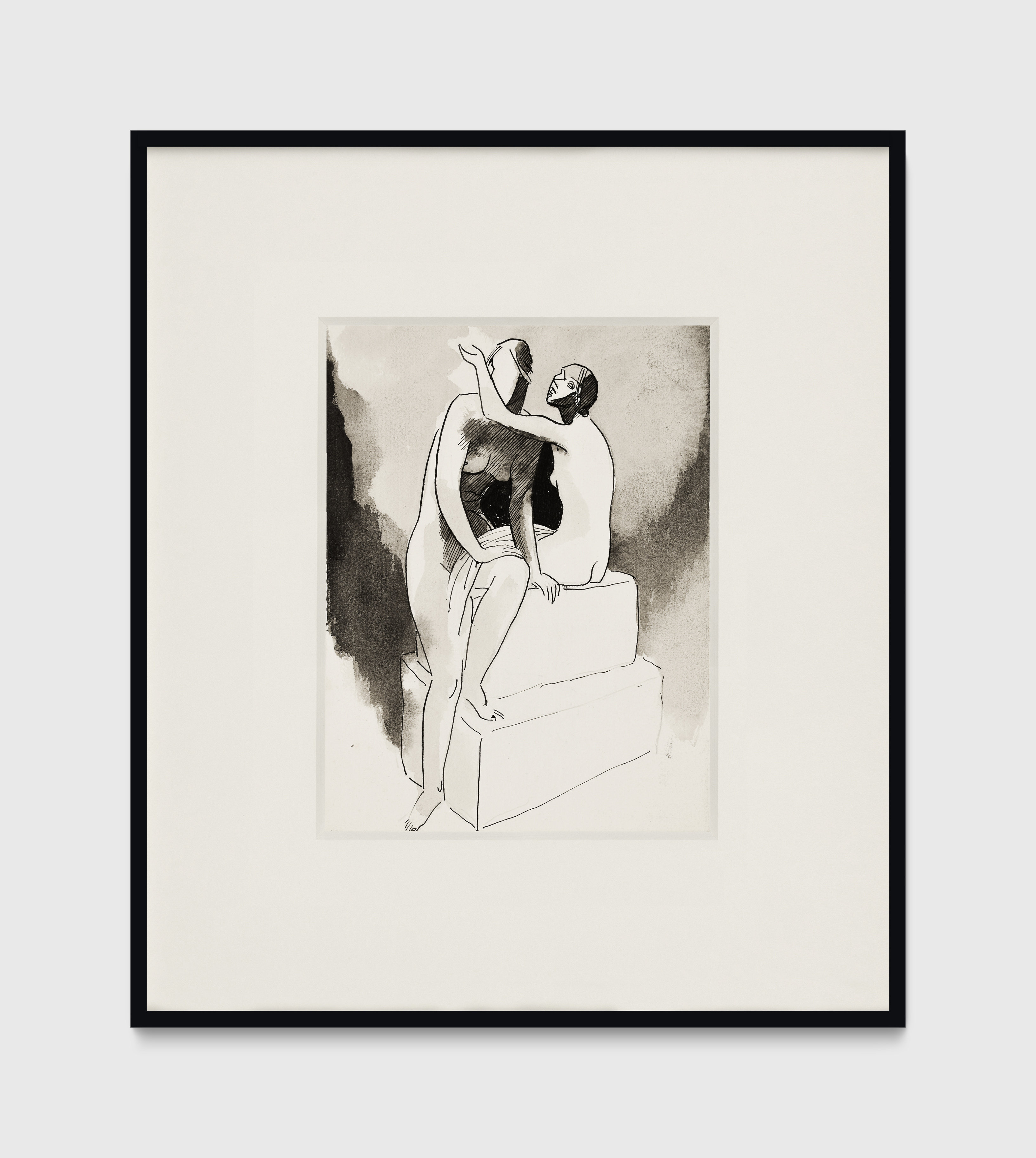
By bringing together these sculptures alongside a selection of González’s drawings, the exhibition underscores the artist’s process-driven practice, in which lines on paper became the conceptual foundation for sculptural invention. His pioneering use of welded iron and bronze not only redefined the possibilities of sculpture but also laid the groundwork for later artists such as David Smith and Anthony Caro. Through this rare grouping of works, viewers are invited to engage with González’s deeply personal yet universally resonant vision—one that speaks to the enduring relationship between drawing, sculpture, and material innovation in the modern era.
Stories
Essay · Allison Hayes · March 17, 2025
Roberta González
Rediscovering a Forgotten Voice
What does it take for an artist to be truly seen? For Roberta González (1909-1976), nearly half a century had to pass before the art world finally recognized the depth of her work. A fixture in the Parisian avant-garde, she was shaped by the creative energy of Montparnasse, where Picasso and Brancusi were regular presences in her childhood. Her father, Julio González, was a pioneer of iron sculpture, and her husband, Hans Hartung, would become a leading figure of lyrical abstraction. Yet, despite this proximity to artistic greatness, González's own contributions remained largely overlooked-until now.
Read More