Presented in 2017, this exhibition marked Zeit Contemporary Art’s first public project, focused on Eddie Aparicio’s monumental rubber casts and the histories of material, migration, and exchange embedded within them.
Eddie Aparicio's work examines the interplay between raw materials, cultural history, and global commerce, rooted in the indigenous knowledge and traditions of Latin America. Rubber sits at the center of his practice, a substance first cultivated and processed by pre-Hispanic communities in Central America long before it became one of the region's most consequential export commodities under colonial and, later, industrial trade. The material carries both histories at once: the indigenous technical knowledge that first gave rubber its form, and the extractive economies that later turned it into an instrument of global commerce.
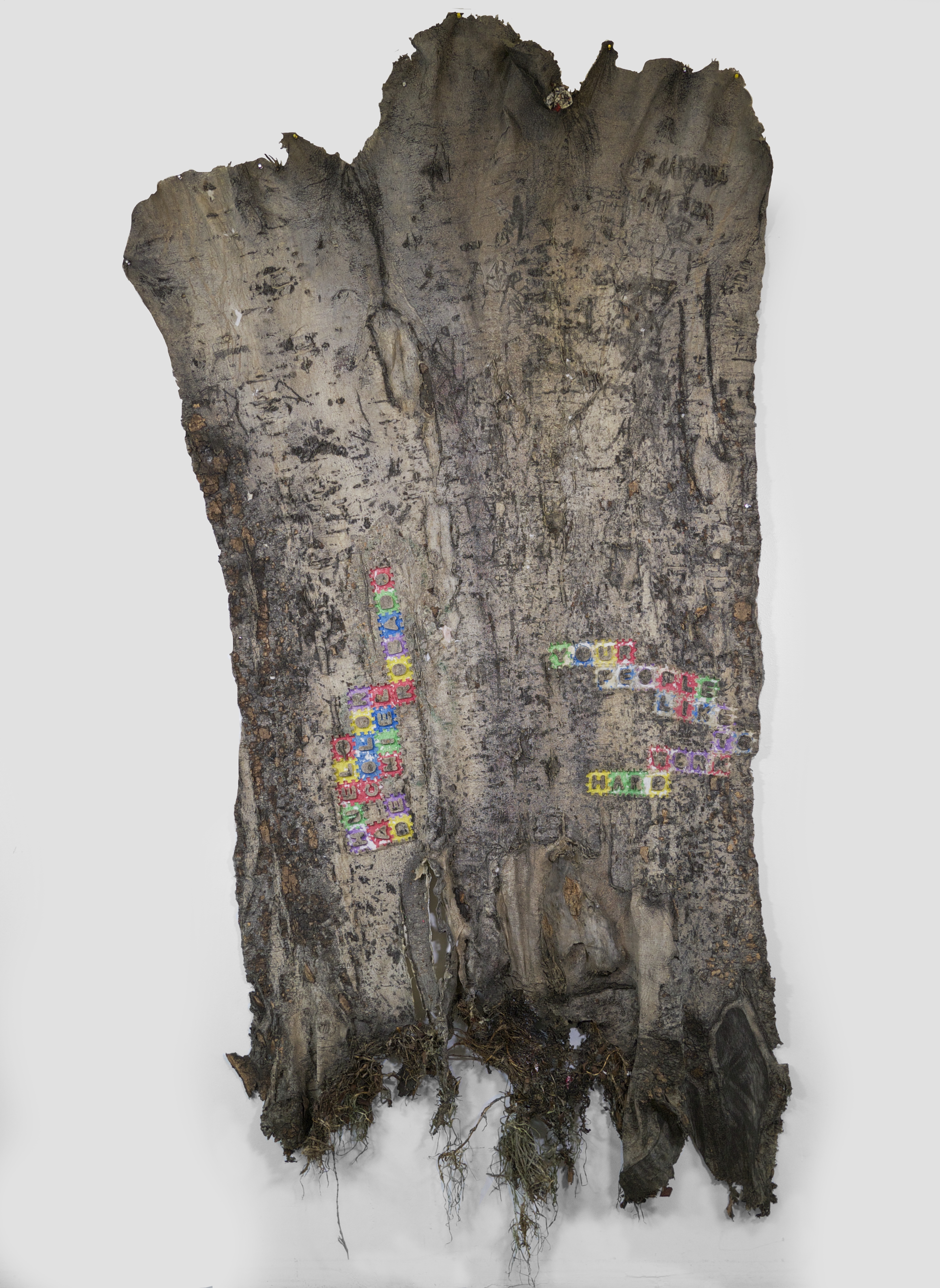
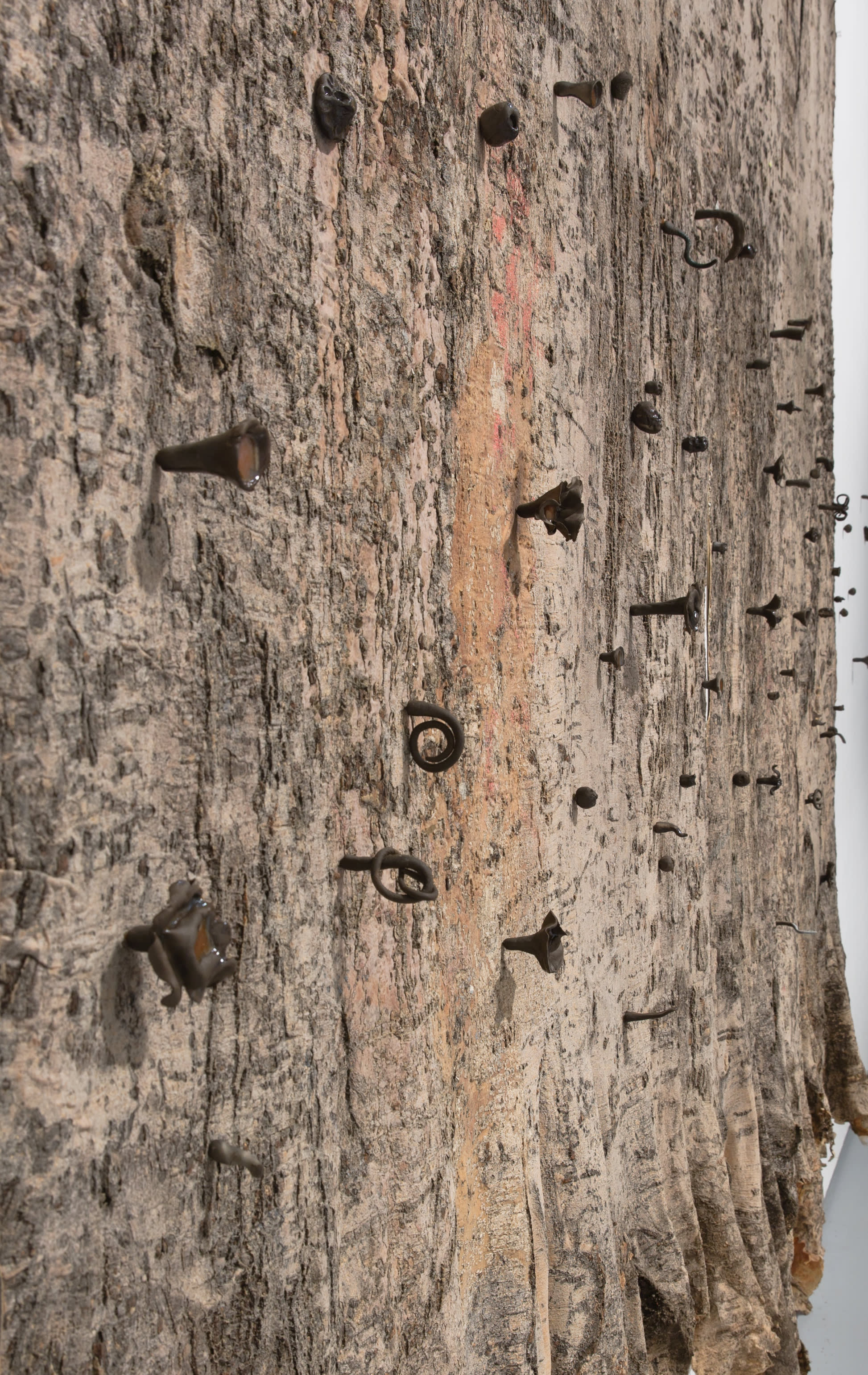
This project focuses on Aparicio's monumental rubber casts, which serve as both physical and metaphorical records of the socio-economic ties between Latin America and the United States. To make them, Aparicio coats the trunks of Los Angeles trees, many of them ficus and many already marked for removal, in liquid latex drawn from Castilla elastica, the same rubber tree historically used by Indigenous Salvadoran communities. He leaves the rubber to cure for weeks, then peels it away slowly, lifting a direct impression of the tree's surface. Bark, scarring, old flyers and staples, a faint discoloration from years of passing traffic: all of it stays behind in the cast. The result reads less like a sculpture of the city and more like something pulled straight out of it.
Through this site-specific process, Aparicio creates artworks that embody the layered histories of migration, labor, and cultural exchange linking Central America and Los Angeles. His work does not treat the two as separate geographies; they read more like two points on one continuous history. There is a formal lineage here too. The interest in latex, in entropy, in slow material decay, extends the vocabulary of 1970s Process Art, the same territory Eva Hesse worked in decades earlier with her own latex sculptures. Aparicio bends that vocabulary toward something more specific, however: the indigenous, extractive, and diasporic histories of Central America, rather than abstraction for its own sake. An overlooked material becomes, in his hands, a kind of monument, one built to hold what official records tend to leave out.
Among the featured works, City Bus Memorial (Fig. and Ave. 60, LA, CA) (2016) is one of the clearest expressions of this approach. Aparicio cast it directly from a ficus tree at the Los Angeles intersection named in the title, working rubber and tree residue into a linen support nearly nine feet tall and some fourteen feet across. What survives on its surface is specific to that one corner: cracked bark, tags and stickers, a haze of exhaust built up over years of bus traffic. The weathered, decayed look of the piece sets up a quiet tension between permanence and ephemerality, one that runs through Aparicio's broader concern with migration and cultural identity. A bus stop most people would walk past without a second glance becomes, here, something closer to a monument: a record of place, memory, and the community that passed through it every day.
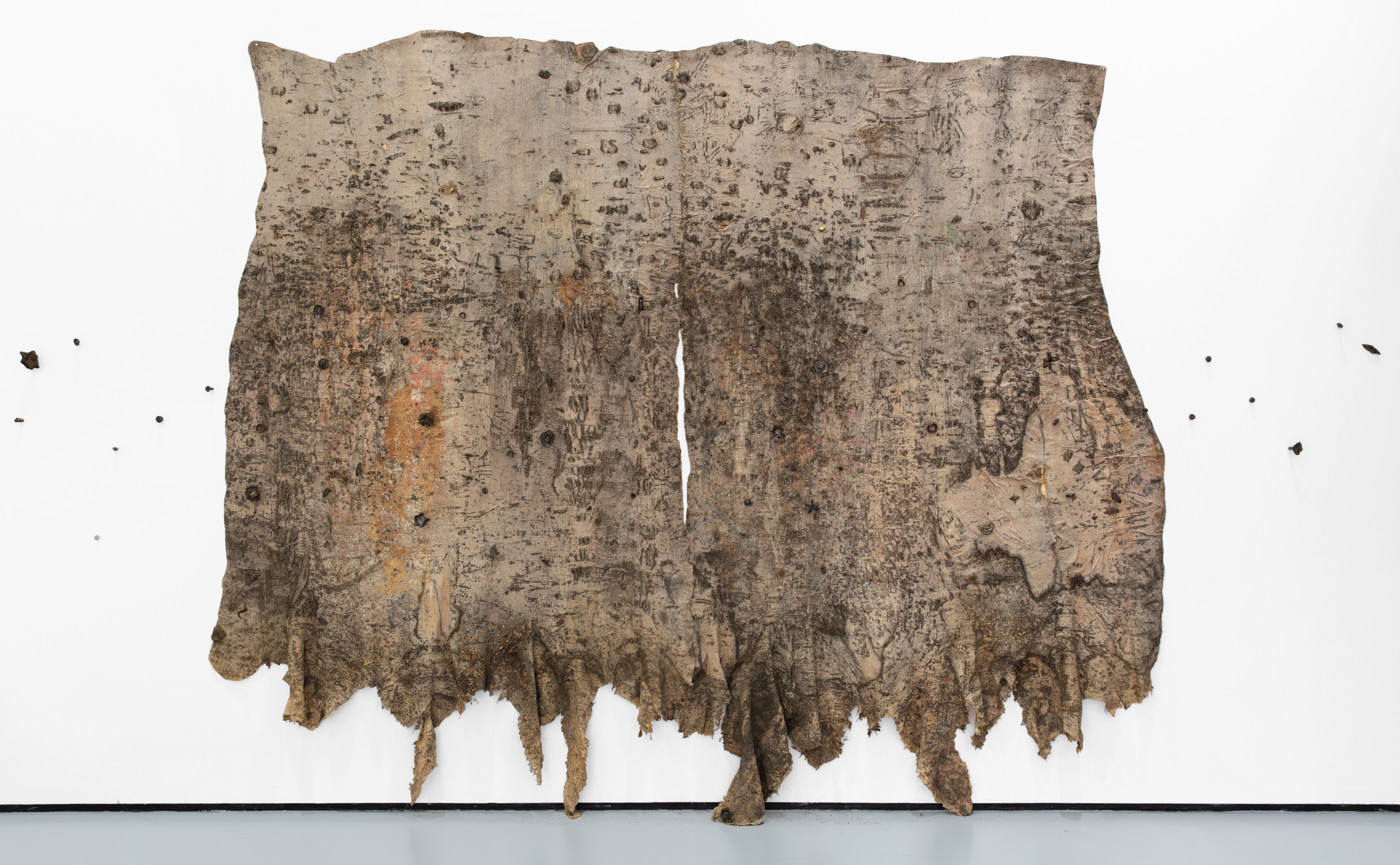
Eddie Aparicio. City Bus Memorial, 2016. Image courtesy of the artist and Zeit Contemporary Art, New York.
About the Artist
Eddie Rodolfo Aparicio (b. 1990, Los Angeles) holds a BA in Studio Arts from Bard College (2012) and an MFA in Painting/Printmaking from Yale University (2016), and attended the Skowhegan School of Painting and Sculpture. In the years since this exhibition, his Caucho (Rubber) series has grown into an expansive body of work that now incorporates amber, ceramic, textile, and found clothing, developed through solo exhibitions at The Mistake Room (Los Angeles), Páramo (Guadalajara), Commonwealth and Council (Los Angeles), and Los Angeles State Historic Park with Clockshop, among others. In 2023-24 Aparicio received his first solo museum presentation, MOCA Focus: Eddie Rodolfo Aparicio, at the Geffen Contemporary at MOCA in Los Angeles. He was named ARTnews' 2024 Emerging Artist of the Year for that show, and that same year his work appeared in the Whitney Biennial. His most recent solo exhibitions include presentations at Art Omi and Commonwealth and Council, both in 2025, and his work is held in the collections of LACMA, the Hammer Museum, MOCA, and the Denver Art Museum. Aparicio lives and works in Los Angeles.