
Articles


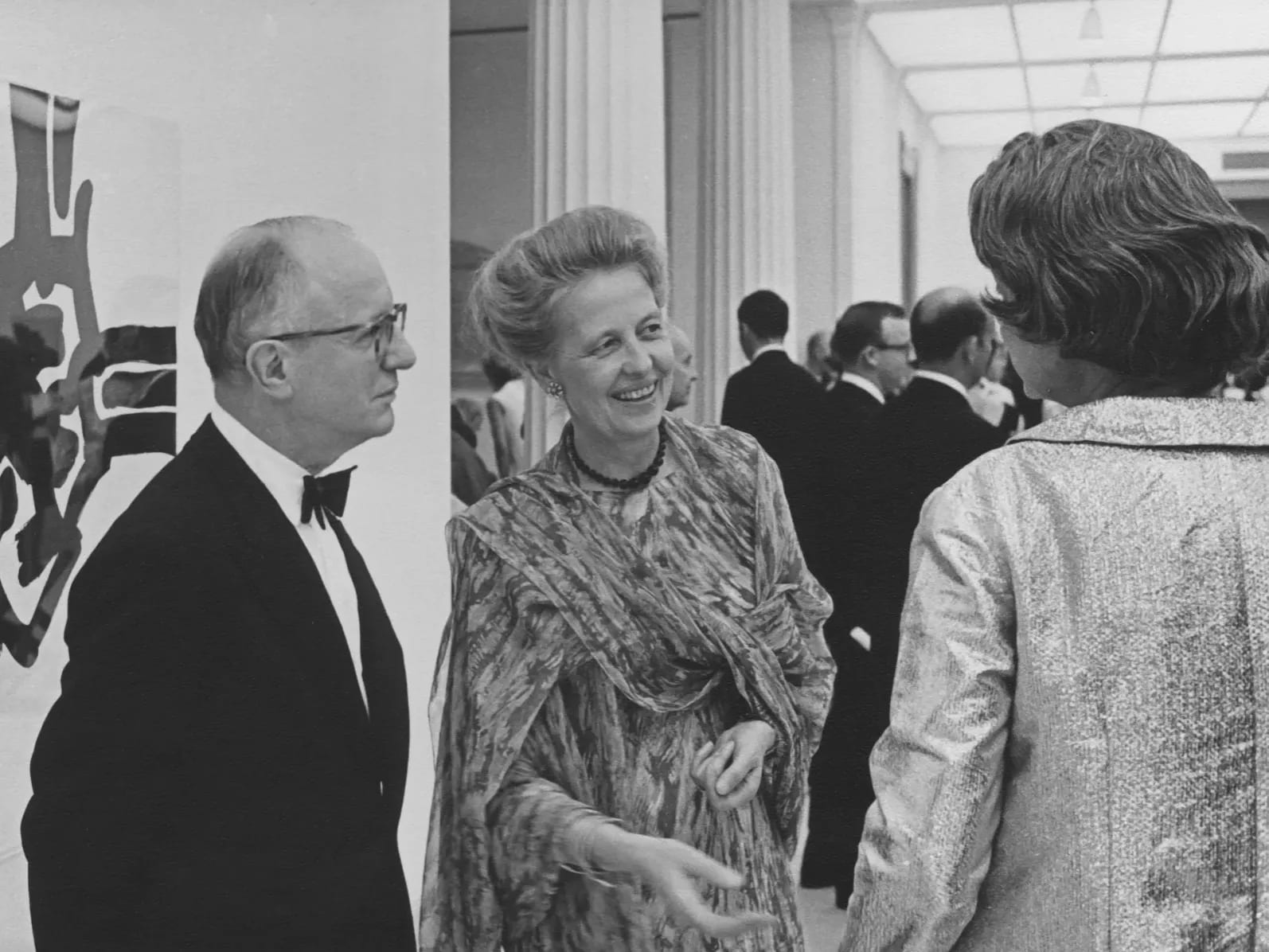
Dominique and John de Menil and the Ethics of Attention
This essay continues The Architecture of Collecting, a series on the spaces, patrons, relationships, and intermediaries through which twentieth-century art entered cultural memory. Dominique and John de Menil built one of the great anti-trophy collections of modern history, shaping not merely an accumulation of objects but a set of conditions, including architecture, scholarship, faith, friendship, and institutional care, through which art could be encountered with seriousness, freedom, and moral consequence.
Philip Johnson, David Whitney, and Postwar American Art
This essay inaugurates The Architecture of Collecting, a series on the spaces, patrons, relationships, and intermediaries through which twentieth-century art entered cultural memory. At Philip Johnson and David Whitney’s Glass House, collecting became a form of cultural construction: a web of objects, rooms, artists, friendships, institutions, and future histories, shaped by architecture and by the conditions through which art is seen, remembered, donated, dispersed, and ultimately canonized.
Benita Koch-Otte's Modernism
With the loom's grid and the camera's frame, Benita Koch-Otte stages not ornament but reasoning, turning color into system, binding into composition, room into choreography, craft into ethos.
Sonia Delaunay : La couleur rendue publique
Sonia Delaunay a transformé la couleur, passant d'une préoccupation picturale privée à un langage public déployé sur les tissus, les carrosseries d'automobiles et les couvertures de livres.