
Robert Mapplethorpe

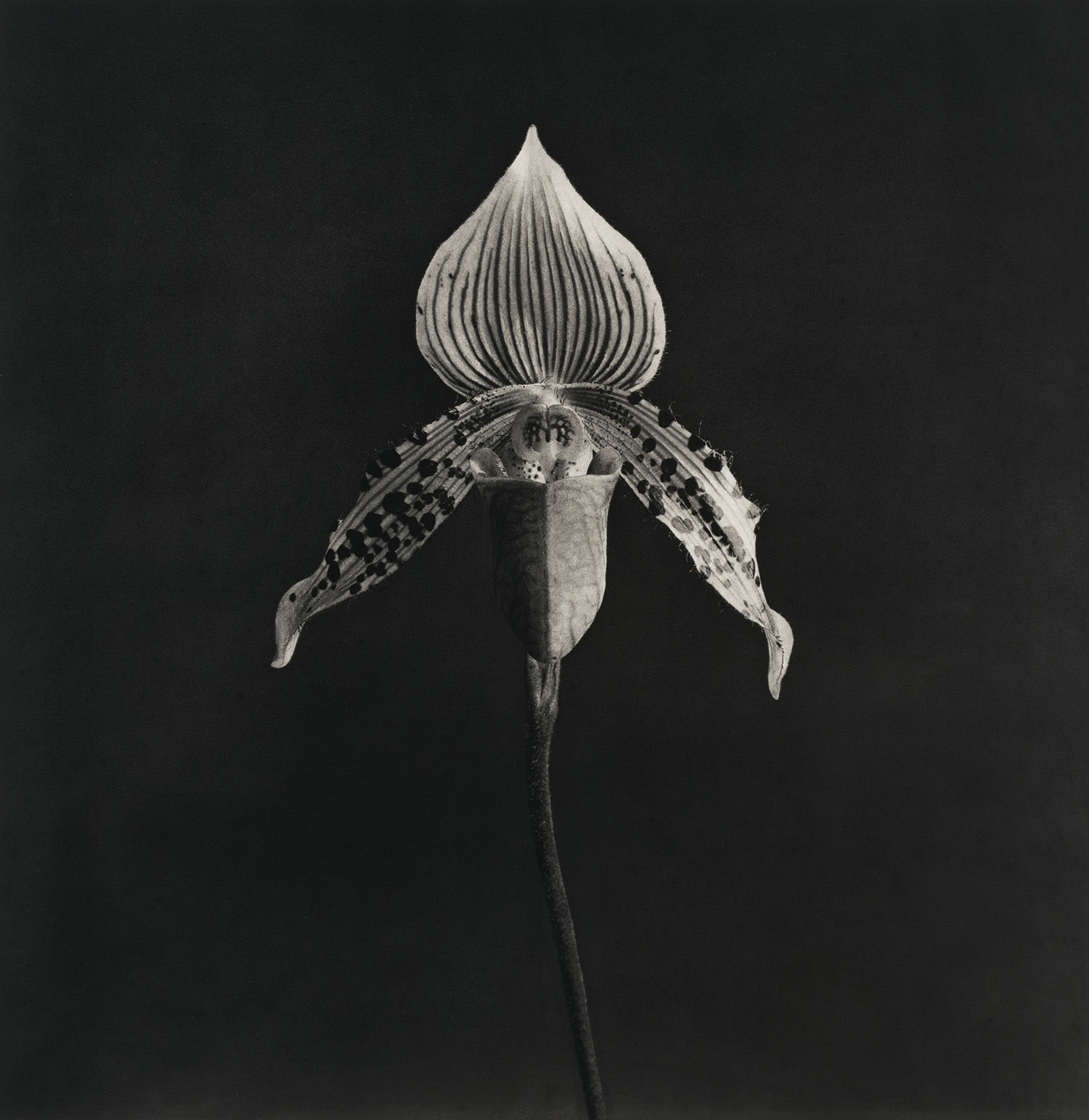
Robert Mapplethorpe (Floral Park, New York, 1946 – Boston, Massachusetts, 1989) built a body of black-and-white photography defined by a classical sense of balance and composition, applying the formal vocabulary of studio portraiture, symmetrical framing, even lighting, a neutral ground, precise tonal control, to subjects that mainstream photography had kept at its margins.
Mapplethorpe studied drawing, painting, and sculpture at Pratt Institute, and in the late 1960s shared a formative life with the artist and poet Patti Smith, first at the Chelsea Hotel; she remained one of his most important early subjects and champions. Initially drawn to assemblage, he began incorporating Polaroids into mixed-media collages around 1970 before committing to the camera outright, holding his first solo exhibition at Light Gallery in 1973. His work sharpened after he acquired a Hasselblad medium-format camera in 1975, and his relationship with the curator and collector Sam Wagstaff, his partner and patron until Wagstaff's death from AIDS in 1987, gave him both financial support and a serious grounding in photography's own history as an art form.
Projects
Seeing Nature
28 April - 15 July 2021
An online viewing room showcasing modern, postwar, and contemporary works related to being in, looking at, and interacting with nature.
View ProjectStories
Publications
Mapplethorpe Flora
Mark Holborn; Mark Holborn and Dimitri Levas; Introduction by Herbert Muschamp; essay/foreword contribution by Dimitri Levas.
Phaidon Press, New York, 2016
View MoreSelected Press
Zeit Contemporary Art Explores the Captivating Power of Nature in Art
Contemplando la naturaleza en Zeit Contemporary Art
Ana Robledano Soldevilla
Seeing Nature
Seeing Nature. Online Viewing Room: Subjectivity and Reflection
Krysstell Marín