
Jean Dubuffet

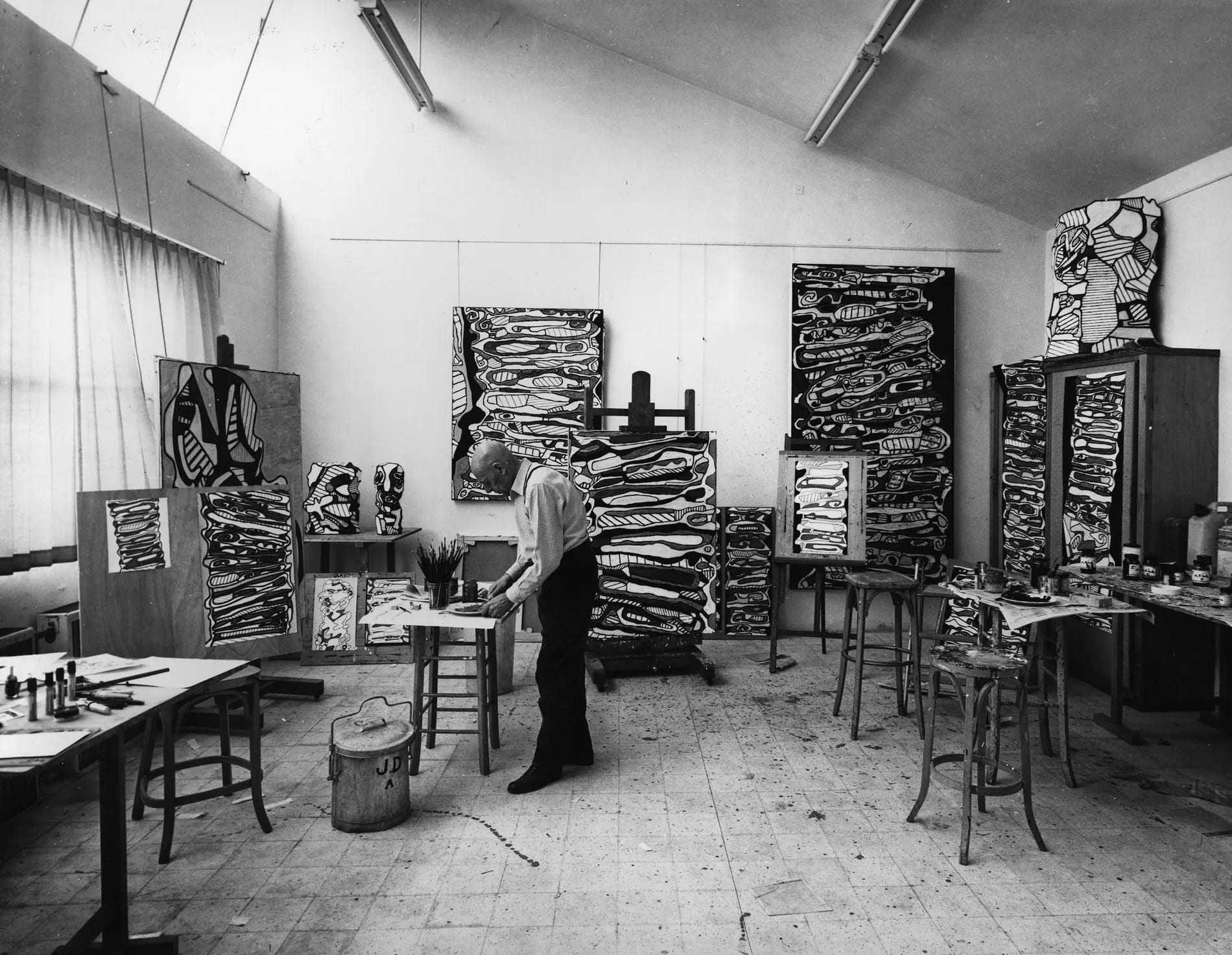
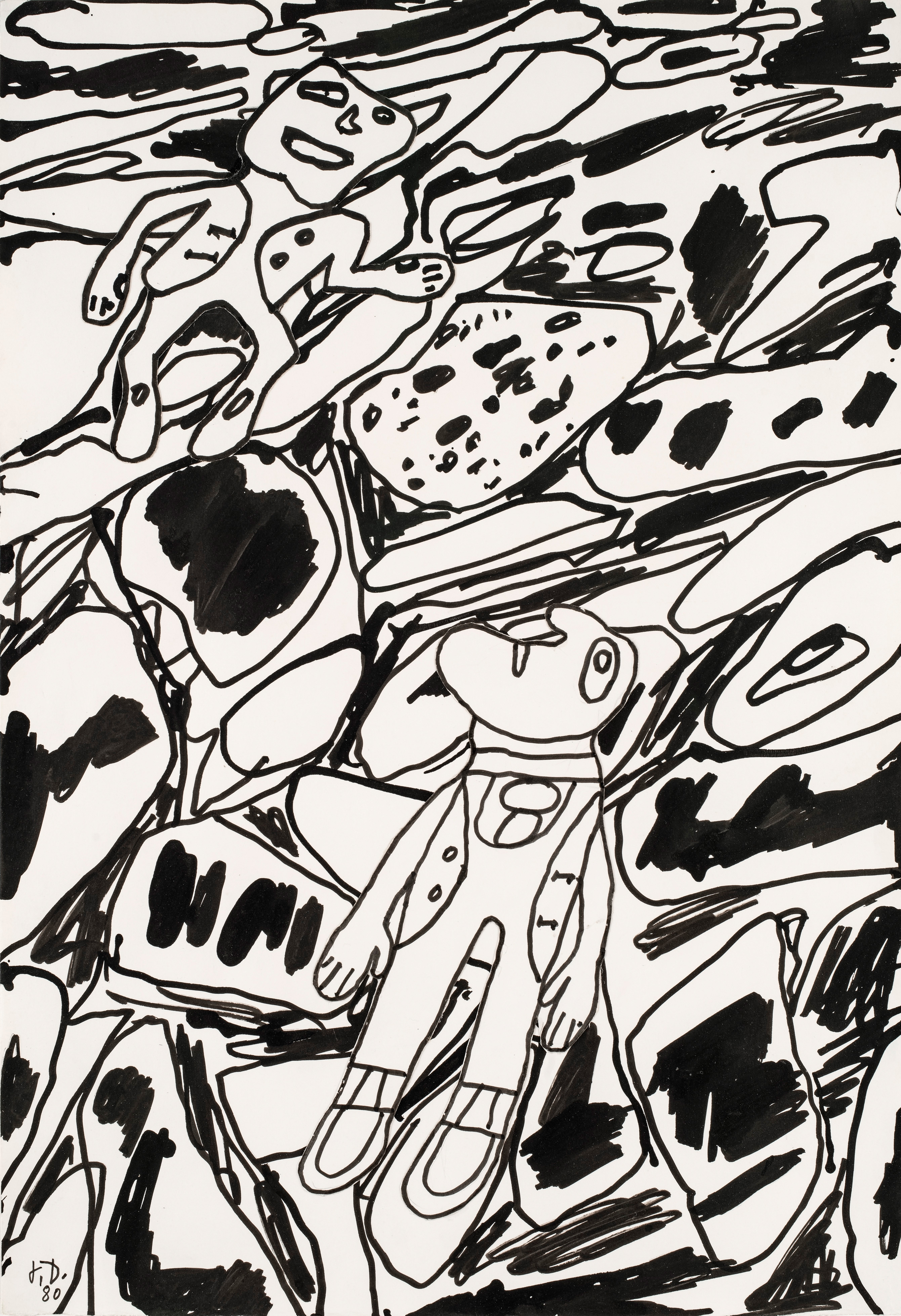
Jean Dubuffet (Le Havre, France, 1901 – Paris, France, 1985) was one of the most radical figures in postwar European art, whose work set out, in his own words, to overturn conventional standards of beauty in favor of something rawer and more immediate.
Though he showed early aptitude for painting, Dubuffet spent much of two decades moving between art and the family wine trade before committing fully to painting in 1942; his first solo exhibition, at Galerie René Drouin in Paris in 1944, announced him as one of the most provocative new voices in French painting. He coined the term Art Brut, "raw art," for work made entirely outside artistic convention, by psychiatric patients, mediums, prisoners, and self-taught visionaries, a category that was Dubuffet's own construction rather than a neutral classification, and one that later scholarship has complicated for how it grouped vastly different makers and circumstances under a single romanticized label. He nonetheless assembled an extraordinary body of such work, the Collection de l'Art Brut, which he donated in 1971 to Lausanne, where it remains on view.