
Pablo Picasso


Pablo Picasso
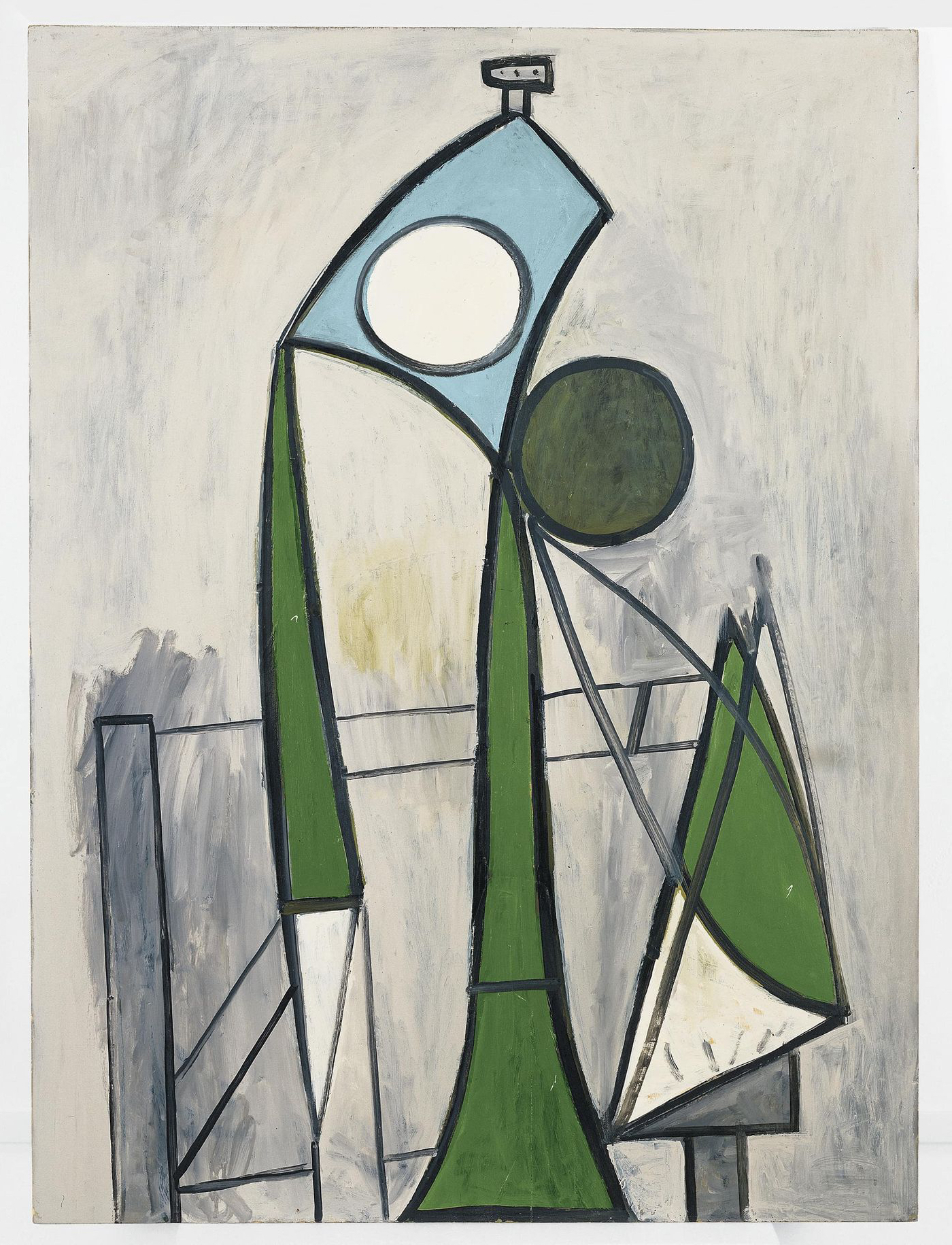
Pablo Picasso (Málaga, Spain, 1881 – Mougins, France, 1973) was one of the defining artists of the twentieth century and a central figure in the formation of modern art. The son of an academic painter, he received rigorous early training in Spain before moving between Barcelona and Madrid, and eventually to Paris, where he first arrived in 1900 and settled permanently in 1904.
His early Blue and Rose Periods established his command of pathos, figure, and atmosphere, while the radical breakthrough of Les Demoiselles d'Avignon in 1907, which fractured five female figures into angular, mask-like planes, opened the way toward Cubism, developed in close dialogue with Georges Braque. Introduced to Henri Matisse by Gertrude Stein in 1906, Picasso entered a decades-long rivalry and friendship with the older artist, telling his biographer Pierre Daix late in life that "no one has ever looked at Matisse's painting more carefully than I." Through analytic and synthetic Cubism, collage, and papier collé, works that pasted newspaper, wallpaper, and rope directly onto the canvas, Picasso fundamentally altered the relationship between representation, objecthood, and pictorial space.
Picasso worked across more than seven decades with extraordinary range, moving fluidly among painting, drawing, sculpture, printmaking, ceramics, theater design, and illustrated books, from the sculptural weight of his 1920s neoclassical figures to the interlocking, dreamlike distortions of Girl before a Mirror (1932) and, after 1946, an extensive body of painted ceramics made at the Madoura pottery in Vallauris. Politically engaged throughout, he produced some of the most enduring images of modern history, including Guernica, his response to the 1937 bombing of the Basque town by German and Italian warplanes, while returning repeatedly to intimate subjects, the studio, the model, the bull, the still life, rendered in his late years with the speed and economy of an artist who had spent decades testing what a single line could carry.
Picasso's work is held today in major collections worldwide, including the Museum of Modern Art, and in museums devoted entirely to him in Paris, Barcelona, Málaga — his birthplace — and Antibes, where the Château Grimaldi that housed his 1946 studio became, in 1966, the first museum anywhere dedicated to his work. His legacy rests not only on his invention of new visual languages, but also on the force with which he made artistic transformation itself one of the central subjects of modern art.