
Julian Opie

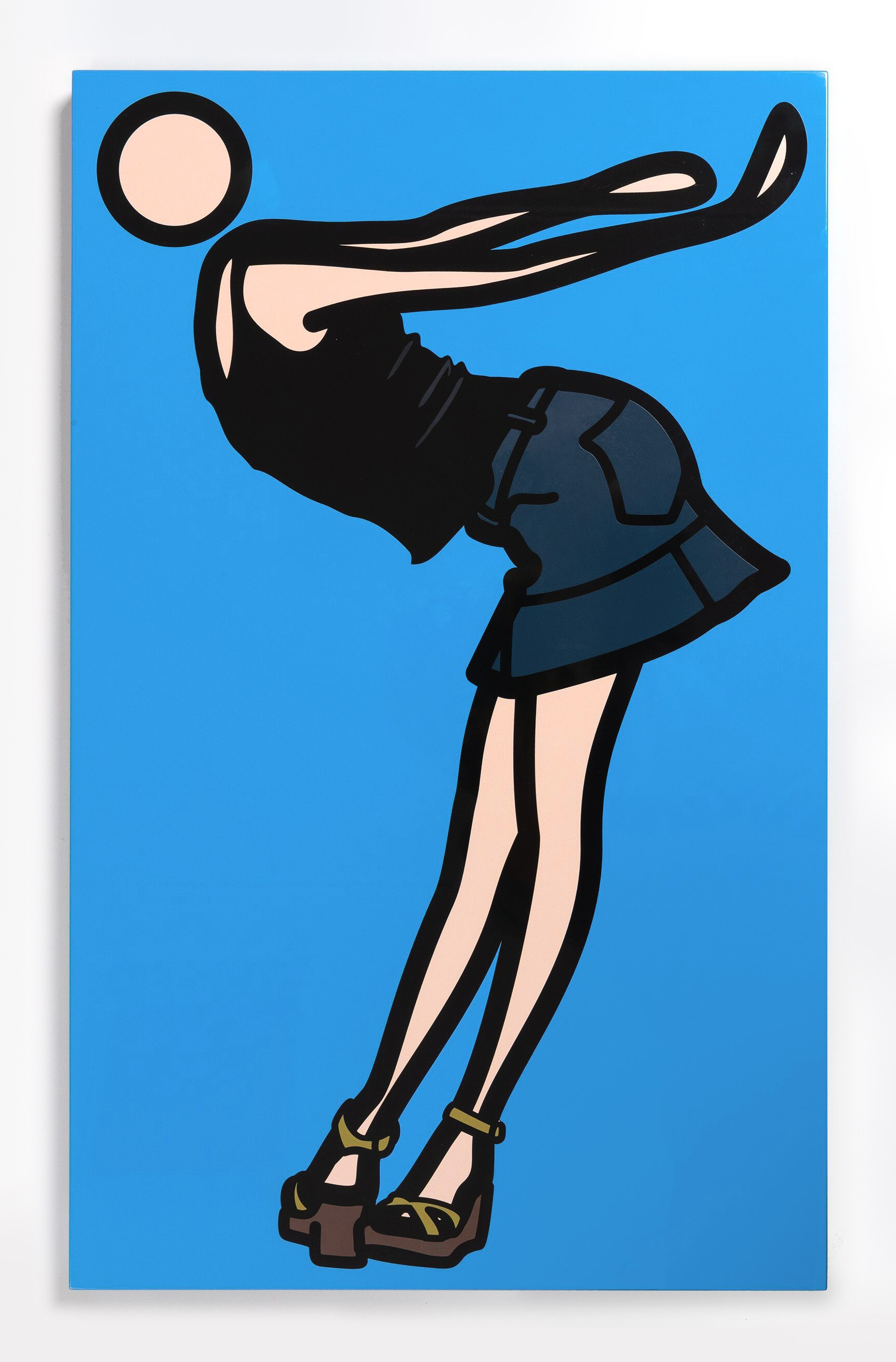
Julian Opie (b. 1958, London, United Kingdom) has spent four decades reducing the human figure and the urban landscape to their essentials, thick black outlines, flat planes of color, a handful of telling details, in pursuit of an old question asked in a thoroughly contemporary way: what does it take for an image to read as a person?
Opie studied under the conceptual artist Michael Craig-Martin at Goldsmiths in the early 1980s, graduating into the New British Sculpture movement alongside artists including Anish Kapoor and Tony Cragg. His earliest work consisted of painted steel sculptures exploring the relationship between vision and space; a 1994 fellowship at the British School at Rome coincided with his shift toward the portraits and figures for which he later became known, distilled from references as varied as Japanese ukiyo-e woodblock prints, early Renaissance portraiture, and the anonymous vocabulary of road signs.
Projects
Alex Katz and Julian Opie
Distillations of Contemporary Life
28 February - 15 May 2022
A juxtaposition of Alex Katz and Julian Opie, who both utilize individual reductive artistic languages reflective of our contemporary world.
View Project